Arc faults are commonly caused by loose connections, damaged cable insulation, compressed cables, poorly made connections and deterioration of cable insulation due to age. These types of faults may lead to overheating and ignition of the insulation of the cable and combustion of any surrounding flammable materials.
There are requirements within the wiring regulations (BS 7671 – that every qualified electrician will work to) to ensure that the electrical installation is designed so that the wiring systems are protected against the type of damage that can lead to arc faults. There are also requirements for every electrical connection to provide durable continuity and adequate mechanical strength; however, electrical fires continue to start and harm life and property.
There are requirements in BS 7671 for the use of RCDs as fire protection; however, they offer limited protection from arc faults, depending on their rated operating current and are unable to detect some arc faults at all. Generally designed to protect against electric shock, RCDs have been the best additional protective measure against fire.
The 18th edition of BS 7671 introduced the use of Arc Fault Detection Devices (AFDDs). These devices are designed to detect an arc fault and disconnect the electrical supply before ignition can occur.
UK government statistics show that 53.4% (14186) of all accidental dwelling fires have an electrical origin. These fires resulted in damage to property, injury to occupants of the buildings and in some cases fatalities. Many of these fires were preventable.
In much the same way that the use of RCDs to prevent electric shock must not lead to complacency and shortcuts in the fundamentals of electrical safety (correct earthing and bonding, etc.) AFDDs offer an additional layer on top of the following correct installation procedures and the use of carefully selected materials appropriate for the environment.
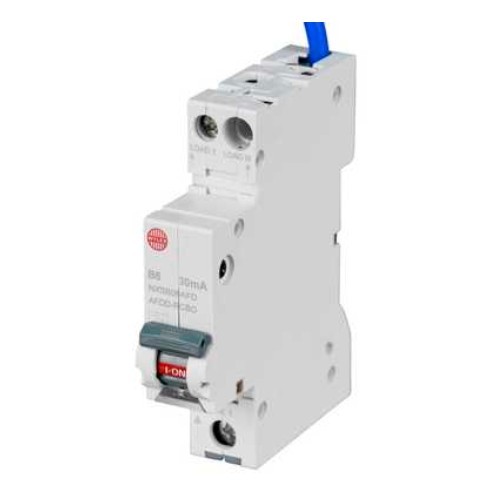
The latest versions of AFDDs only take up the same room inside a consumer unit as an MCB or RCBO (1 module), unlike the larger original devices and can be retro-fitted into a compatible enclosure – for example, a Wylex AFDD (see picture below) can be installed inside an existing (modern, compatible) Wylex consumer unit, either to supply a new circuit or to replace the existing MCB or RCBO. This particular device combines an AFDD with an RCBO – offering the highest level of protection currently available.
Need a consumer unit replacement quote?
Compare quotes from qualified electricians →
For the highest level of electrical safety within a domestic property, an 18th edition compliant enclosure (made from a non-combustible material – metal) fitted with a Surge Protection Device (SPD) and individual protection for each circuit provided by a single module combined Arc Fault Detection Device can be used (see image below – Crabtree in this example)
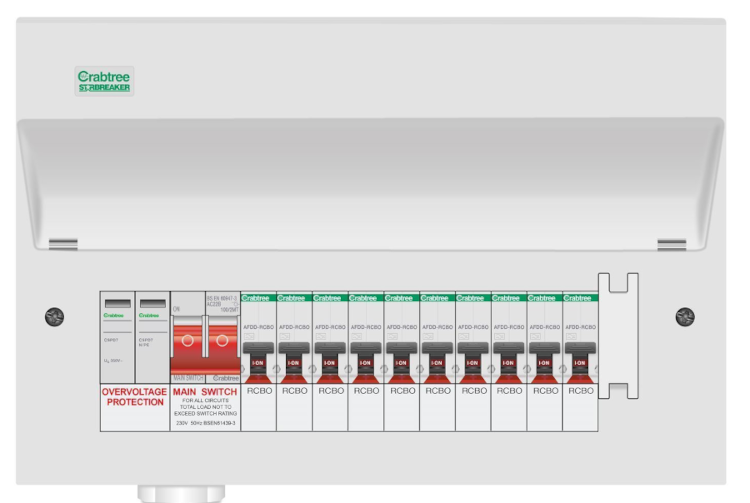
As each AFDD also operates as an RCBO, additional shock protection is built in without the need for a separate RCD. This would represent a sizeable investment, starting at (approximately) £1500 for an average-sized property (total cost would depend upon the number of circuits, please contact us for a no-obligation quote from a local, qualified electrician), but would ensure compliance with the regulations for many years to come and peace of mind knowing the best available protection against electric shock and fire is in place.
However, this level of protection is only mandatory for properties with a higher level of risk, and even though the cost of AFDD’s has fallen significantly since their introduction, it will probably be some time before widespread adoption.
A single module AFDD combines the short-circuit and overcurrent protection duties of an MCB, the earth fault additional protection of an RCD, with arc fault detection that can prevent fires.
RCDs save lives and prevent injury by preventing electric shock, and AFDDs do likewise by preventing the cause of many electrical fires.
AFDDs can be fitted to some or all circuits in an installation. Whilst these devices have only recently featured in the regulations and are a recommendation rather than a requirement in most domestic properties, there are situations where they are required, depending on the fire risk present. A higher than normal fire risk may be due to wooden buildings and structures made from other combustible materials or high-rise buildings with a complex escape route.
Need a consumer unit replacement quote?